
Why Investing in Student Housing Makes Sense in any market
The Asset Class That Never Really Left
Student housing sits at the intersection of multifamily stability and demographic inevitability. While often grouped with traditional apartments, purpose-built student housing (PBSA) behaves very differently—and in 2026, those differences matter more than ever.
As capital has rotated away from overbuilt Class A urban multifamily and into needs-based housing, student housing has reasserted itself as a resilient, cash-flow-forward asset class with built-in demand drivers.
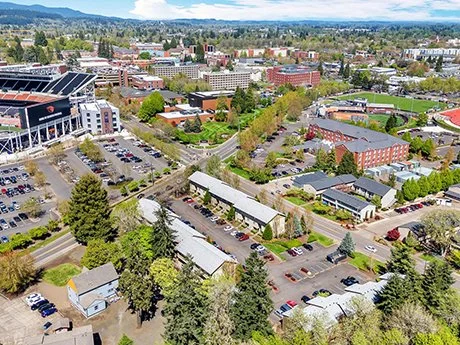
Student Housing is a Real Estate Asset
It is not simply multifamily “near a campus.” It is a distinct operating model, with its own leasing cycles, risk profile, and upside levers..
Predictable Leasing, Predictable Cash Flow
One of the strongest advantages of student housing is leasing visibility.
Units are typically pre-leased 6–10 months in advance
Leases are commonly 12 months, minimizing seasonal vacancy
Occupancy risk is front-loaded and known well before the academic year begins
Parents or guardians often act as lease guarantors, reducing credit risk
For investors, this translates into early revenue certainty and tighter underwriting compared to conventional multifamily.
A Built-In Community, by Design
Students don’t just rent apartments—they rent proximity, identity, and social density.
Purpose-built student housing creates:
Peer-based living environments
Campus-adjacent convenience
A lifestyle substitute when on-campus housing is constrained or unavailable
Many universities continue to face aging dorm stock, enrollment caps, or budget limits, pushing demand off campus—even at flagship institutions.
Rent Premiums Through Experience, Not Just Space
The most successful student housing operators in 2026 understand that rent growth is driven less by square footage and more by experience design.
Common premium drivers include:
Fully furnished units
High-speed connectivity and smart access
Study lounges, collaboration spaces, and fitness amenities
Utility-inclusive rent structures that simplify budgeting
These features allow operators to outperform surrounding multifamily on a per-bed basis, even in competitive markets.
Maintenance Reality: Higher Turnover, Higher Planning
Yes—student housing experiences more wear and tear. But this is not a surprise; it’s a line item.
Well-run properties:
Budget proactively for annual refresh cycles
Use standardized finishes to reduce replacement costs
Offset expenses through deposits, guarantor structures, and rent premiums
The key is not avoiding maintenance—it’s pricing it correctly and managing it professionally.
What Separates Strong Student Housing Investments from Weak Ones
Not all student housing performs equally. In 2026, investors should focus on structural demand, not hype.
1. Supply vs. Enrollment Reality
How many students live on campus?
Is enrollment growing, stable, or artificially capped?
Are zoning or land constraints limiting new supply?
Markets with supply friction tend to outperform over time.
2. Public vs. Private University Exposure
Large public universities continue to drive the deepest demand pools, supported by:
In-state tuition affordability
Stable or growing enrollment bases
State-backed institutional continuity
3. Distance Still Matters
For undergraduates especially:
Walkability (¼–½ mile) remains a major advantage
Transit access or dedicated shuttle services can compensate—but only if frictionless
4. Furnished Is No Longer Optional
In a mobile, transient student economy, furnished units reduce move-in friction and increase leasing velocity. Properties that replicate the convenience of dorm living with the privacy of off-campus housing win consistently.
Is Student Housing Still Recession-Resistant?
Short answer: yes—structurally, not perfectly.
Historically, college enrollment has shown low correlation with economic downturns. In uncertain job markets, higher education often becomes a defensive choice rather than a discretionary one.
Student housing benefits from:
Counter-cyclical enrollment behavior
Multi-year degree timelines
Demand driven by life stage, not employment cycles
It is not immune to macro shocks—but it is insulated relative to most real estate sectors.
Enrollment Trends: The Long Game Still Favors Housing
While enrollment ebbs and flows by region and institution, the broader trend remains intact:
Students continue to pursue degrees tied to income mobility
Universities remain economic anchors in their regions
Housing demand follows enrollment more reliably than almost any other variable
In other words: students will keep needing beds, even as delivery formats and campus policies evolve.
The Opportunity Set
Today’s student housing opportunity is less about recovery and more about selective growth.
The strongest investments share common traits:
Established universities with stable enrollment
Undersupplied or supply-constrained submarkets
Professional operators with proven pre-leasing execution
Moderate leverage and realistic exit assumptions
As capital markets normalize and construction slows, well-located existing assets stand to benefit from limited new competition and consistent demand.
Final Thought
Student housing is no longer a niche bet—it’s a disciplined allocation within a diversified real estate strategy.
For investors seeking:
Predictable income
Demographic-driven demand
Operational upside without speculative exposure
Student housing continues to make sense—not because it’s trendy, but because it’s structurally necessary.